
- Call Us Now 0530 642 09 49
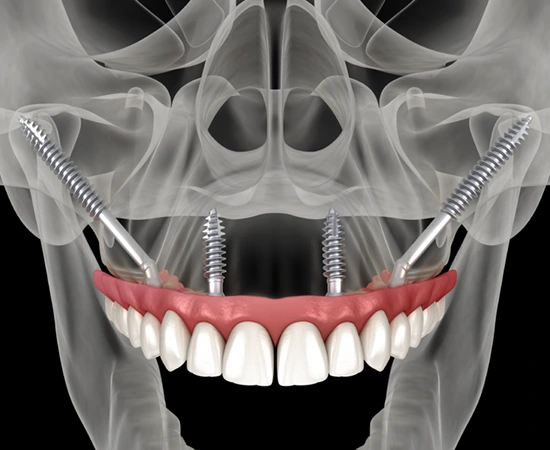
Zygoma implants, also known as zygomatic implants, are a technique applied to patients who do not have sufficient bone in the upper jaw for implant placement. This technique, which is applied in a way similar to implants, is placed in the zygomatic bones. The zygomatic bones have the thickness and strength suitable for the placement of dental implants. With this technique, patients are treated with special implants measuring 4.5–5 cm, which are longer than standard implant lengths.
For this reason, long-term results are obtained in patients with bone loss for whom bone graft surgery is not suitable. Another advantage of the zygoma implant is that it can also be applied to patients whose upper jaw has been surgically removed.
Zygomatic implants are an ideal implant technique for individuals who have experienced tissue loss in the treatment area due to failed sinus augmentation, failed implant results, tumors or trauma. This technique aims to offer you a shorter treatment by avoiding sinus surgery and grafting procedures.
One of the most remarkable features of the zygoma implant is that it makes implant treatment possible for patients who have lost their upper jaw for various reasons. After the procedure, you should avoid hot food and drinks for a few days and carefully follow the warnings of your dentist. In addition, during the temporary prosthesis period you should strictly avoid consuming hard foods.
I thought the zygoma implants I had would be very different from regular implants, but I was wrong. They turned out to be just as functional and permanent. I have been using them for about 1 year and they have been a more suitable solution than dentures for my age.

I previously had implants done at another clinic, but they didn’t hold. Because my bone was insufficient, I didn’t get any results. I was looking for someone reliable for this treatment and I’m glad I met Dt. Ogün Onur Çömlekçi.

I learned that I was not a suitable candidate for a standard implant. Instead, I discussed zygomatic implant treatment with Dt. Ogün Onur Çömlekçi and my implants were placed. I am currently waiting for them to heal; it was a painless, comfortable procedure for me.

When zygomatic implants are properly maintained and used in line with your dentist’s instructions, they provide a successful durability of around 12 years.
The zygomatic implant process is almost the same as a normal implant procedure. It is performed under general anesthesia in a sterile environment. After the procedure, any discomfort is kept under control with ice application and painkillers.
A zygoma implant is longer than traditional dental implants (4.5–5 cm) and can be applied without the need for additional procedures such as adding bone grafts.
Zygoma implant treatment requires more knowledge and experience than conventional implant procedures, and therefore should be performed by an experienced specialist. Patients who do not have sufficient bone tissue in the upper jaw, or who are missing the upper jaw, are good candidates for zygoma implants.
The effect of the general anesthesia used during zygomatic implant surgery usually wears off within a few hours. After this period, you can continue eating as long as you avoid very hard and hot foods. However, paying attention to your dentist’s advice regarding post-surgical nutrition is of vital importance to prevent possible health problems. Even if the implants appear to have healed, keep in mind that they will not fully strengthen for about 5 months.
During implant surgery, your gums receive an incision. After the procedure, you should avoid hot drinks such as tea and coffee for two or three days.
Zygomatic implants can be used in cases such as sinus enlargement, tumor resection, trauma, failure to achieve success with other implant procedures and unsuccessful outcomes of bone grafts.
Copyright (c) 2026 Ogun Onur Comlekci