
- Call Us Now 0530 642 09 49
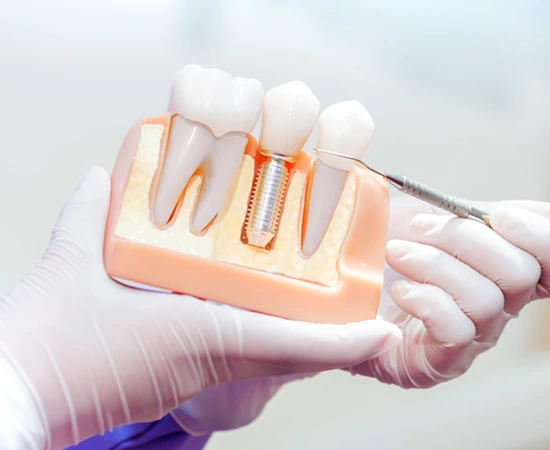
Dental implants are artificial tooth roots surgically placed into the jaw in order to restore a person’s chewing ability and improve their aesthetic appearance. Dental implant surgery not only replaces missing teeth, it also allows loose bridges and dentures to be adjusted and rebuilt.
When a tooth is lost for various reasons, we face complications such as disruption of chewing function, impaired speech and rapid bone loss. Therefore, replacing a lost tooth with an implant is ideal for improving quality of life and overall health. So, who is a suitable candidate for implants?
If you have a missing tooth for any reason, such as injury, infection, congenital anomaly or decay, you may be a suitable candidate for dental implants. However, there are certain points regarding the requirements for dental implants and when they can be effective:
I lost two teeth in my upper jaw a few years ago. A friend told me that Dt. Ogün Onur Çömlekçi does excellent implant work. I was afraid before coming to the clinic, but now all my fears are gone, I thank him very much. I also made a follow-up appointment for 3 months later.

I don’t know why I waited so long to have implants, but I’m glad I met Dt. Ogün Onur Çömlekçi. I recommend him to anyone considering having implants.

One of my teeth had to be extracted because it could not be saved with root canal treatment, but I couldn’t gather the courage to see a dentist for a long time. About 9 months ago, I met Dt. Ogün Onur Çömlekçi. We placed an implant for that tooth and the procedure was very comfortable, I did not feel anything. My tooth is very good now, many thanks.

Implants are not affected by dental problems such as cavities, unlike natural teeth. However, overall oral hygiene is extremely important for the implant to function efficiently. With proper care by the patient after implant placement and regular check-ups with the dentist, a high success rate can be achieved.
The success rate of dental implants varies from person to person. In individuals who maintain good oral hygiene and attend regular dental check-ups, this rate has been reported to be over 90–95%.
The All-on-Four technique is a procedure that involves restoring all missing teeth in one jaw using basically 4 implants. This treatment is ideal for patients with inadequate bone volume.
Dental implants are surgically fixed firmly into the bone, providing a result as strong as a natural root. Implant-supported prostheses, on the other hand, can be made as fixed or removable.
Anyone who is missing a single tooth or all of their teeth and whose general health status does not prevent implant treatment is a good candidate for implants.
The lifespan of an implant varies depending on your chronic conditions and how much attention you pay to your oral hygiene. The life of a well-maintained dental implant is on average between 25 and 30 years.
The lifespan of an implant varies depending on your chronic conditions and how much attention you pay to your oral hygiene. The life of a well-protected dental implant is on average between 25 and 30 years.
If an implant fails, the treatment can be repeated. Failure is usually due to insufficient bone or inflammatory tissue. After the necessary procedures are performed, time is allowed for the area to heal.
The treatment time for a single implant is approximately 15–20 minutes. Once the area is surgically opened, placing the implant itself takes about 5 minutes. After the implants are placed in the jawbone, a waiting period of 3–6 months (usually 3 months) is required for them to fuse with the bone.
Implant treatment does not pose any risk as long as it is carried out by a specialist dentist. However, improper applications can be a risk factor for jawbone resorption and infection.
Copyright (c) 2026 Ogun Onur Comlekci